Entrepreneur or businessman? Why I build sustainable businesses, not startups
The difference between an entrepreneur and a businessman, and why I chose one cash-heavy business, no VC money, and profits that fund the next idea.
People often call me an entrepreneur. I usually correct them: I think of myself as a businessman. That is not modesty. It is a choice about how I want to build, and it shapes every business I run, from Photon Academy to WebSEO.sg.
What is the difference between an entrepreneur and a businessman?
In everyday use, the two words overlap. Anyone who starts a business and takes the risk is usually called an entrepreneur, so by that meaning, I am one.
There is also a stricter meaning. The economist Joseph Schumpeter described the entrepreneur as an innovator: someone who changes how things are done, with a new product, a new method or a new market, and in the process pushes the old way out. He called that process "creative destruction". Think of the people who changed how we hail a taxi, pay for things or watch films.
A businessman, in that stricter sense, builds and runs a business in a market that already exists, and runs it well: good product, fair price, steady profit.
| Entrepreneur (strict sense) | Businessman | |
|---|---|---|
| Goal | Change how people do something | Do a known thing better, and profitably |
| Market | Often creates a new one | Serves one that already exists |
| Money | Often raises investor money to grow fast | Usually grows from its own profits |
| Risk | High: many fail, a few become huge | Lower: steady, sustainable growth |
| Measure of success | Growth and valuation | Profit, cash flow and freedom |
Why I call myself a businessman
I do not change the way people do things. Parents already pay for IB tuition. Families already buy Maine Coon kittens and move their pets across borders. Small businesses already need websites and SEO.
What I try to do is run each of these properly: show the prices, build good systems, and keep improving them. That is the work of a businessman, and I am happy with the title.
Why I stay out of the VC race
Venture capital (VC) suits the strict kind of entrepreneur. Investors put in money because they expect a few companies to grow very large, very fast, and they accept that most will not make it.
That race is not for me. Raising money means answering to investors, chasing growth targets and often spending money before it is earned. I want something different:
- Sustainable: each business pays for itself.
- Able to scale, to a point: big enough to matter, small enough to stay in my control.
- Automated: once it runs well, systems do the repetitive work.
- Then on to the next idea.
My mantra: one cash-heavy business funds the rest
Every business I build follows the same loop. One business brings in steady cash. For me, that is my IB tuition centre, Photon Academy at ibtuition.sg. Its profits pay for the next idea, so I never need outside money.
That loop is how our family's Maine Coon cattery started, then Pet Agent Singapore, which grew out of bringing our own cats into Singapore, and most recently WebSEO.sg.
Scale it, automate it, then move on
Once a business works, I automate the repetitive parts so it does not need me for every small task. With AI, I have built our own billing system, a worksheet tool that builds a print-ready worksheet from 44,024 questions, and a private system that tracks our companies' records, licences and renewal dates. I wrote about that in how I built my own business software with AI.
Automation is what frees up my time for the next idea, without leaving the last one behind.
Every site links to the others
There is one more part of the loop that most people miss: links. Each of my websites links to the others where it makes sense. A page about the cattery can mention pet relocation; a case study on webseo.sg can point to the site it describes.
Those links help Google, and AI search tools, understand that these businesses belong to the same person and the same family of sites, so each new site starts with a little of the trust the older ones have earned. Relevance matters: a link only goes where a reader would actually want it. It is the same method I now use for clients at WebSEO.sg, tested on my own sites first.
In one line: one cash-heavy business, profits instead of investors, automation instead of more hours, and links that make every new site stronger.
So, am I an entrepreneur?
By the everyday meaning, yes. By the strict one, I am a businessman, and I am proud of it. I build businesses that pay for themselves, run with good systems, and leave me free to start the next one.
Maybe one day one of those ideas will change how something is done. If it does, it will be built the same way: on its own profits.
Questions people ask me
Is a businessman the same as an entrepreneur?
Not quite. In everyday speech the words overlap, but in the stricter sense an entrepreneur changes how things are done, while a businessman runs a business in an existing market, well and profitably.
Do you need VC funding to build a business in Singapore?
Not for the kind of business I build. Each of mine was started and grown from profits, beginning with home tuition while I was still a student.
What is a cash-heavy business?
A business that brings in steady cash without large upfront costs. For me, that is tuition. Its profits pay for everything else.
Have an idea we could build together? Work with me.
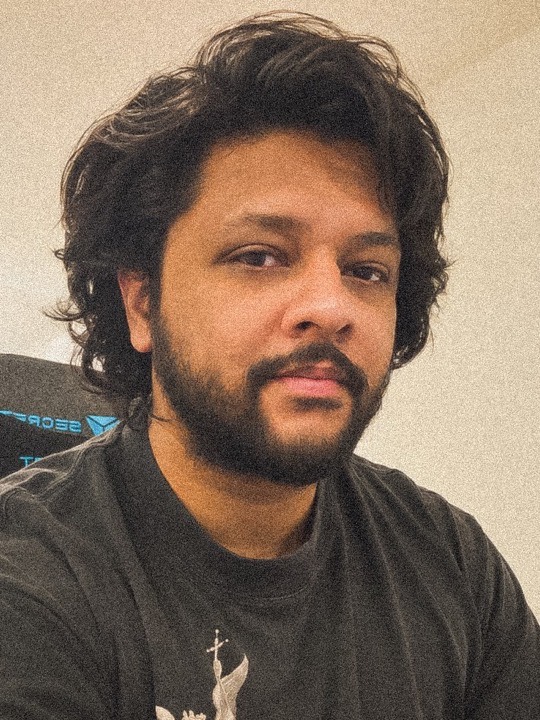
Ejaz Ahmad founded Photon Academy, an IB tuition centre in Singapore, and builds websites, apps and AI systems for his businesses and others. About me · Work with me